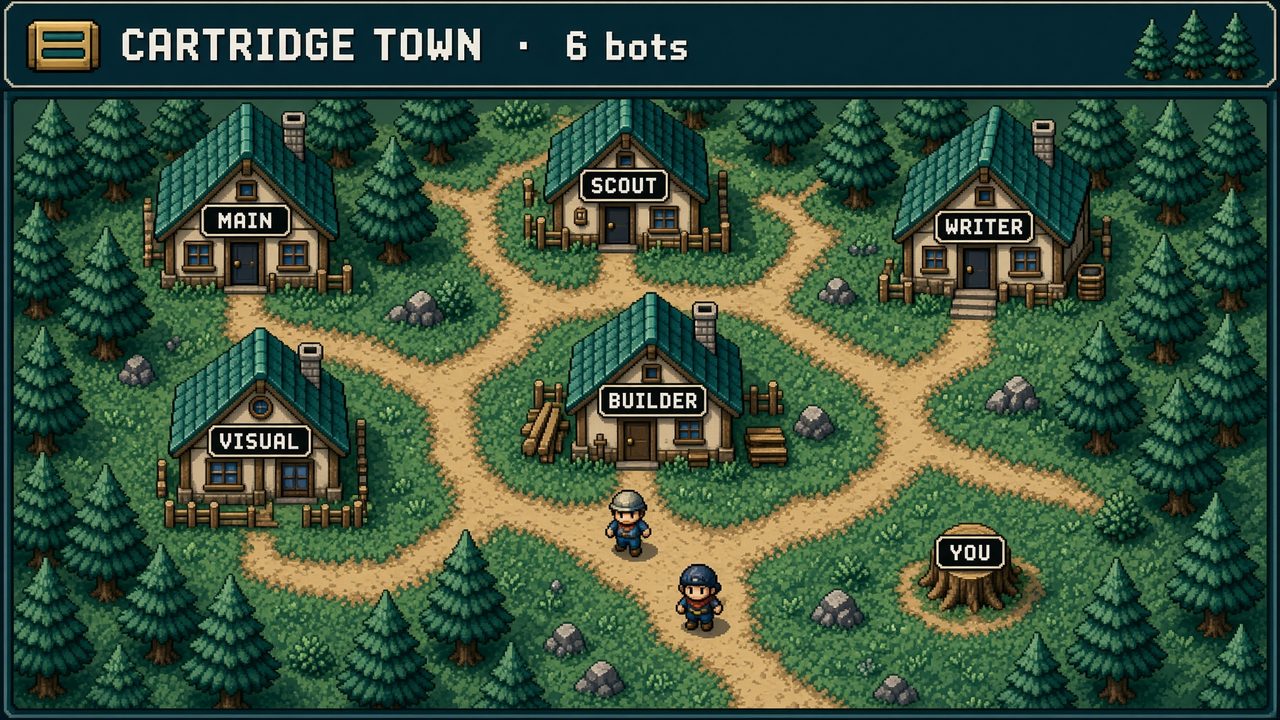
A 16-bit town where each bot has a house. Bots work in their own lots and come to your door when they need your decision.
Works in Grok
8-bit · Main bot setup
42 views
FreeBot meshes
Pick a look. Send it to the main bot. It draws your live roster — who is drafting, who handed work, who is waiting on you. The picture below is a preview. Your bots write the real one.
What a visualization does, and how to set one up · Share a visualization
A 16-bit town where each bot has a house. Bots work in their own lots and come to your door when they need your decision.
Works in Grok
8-bit · Main bot setup
42 views
Free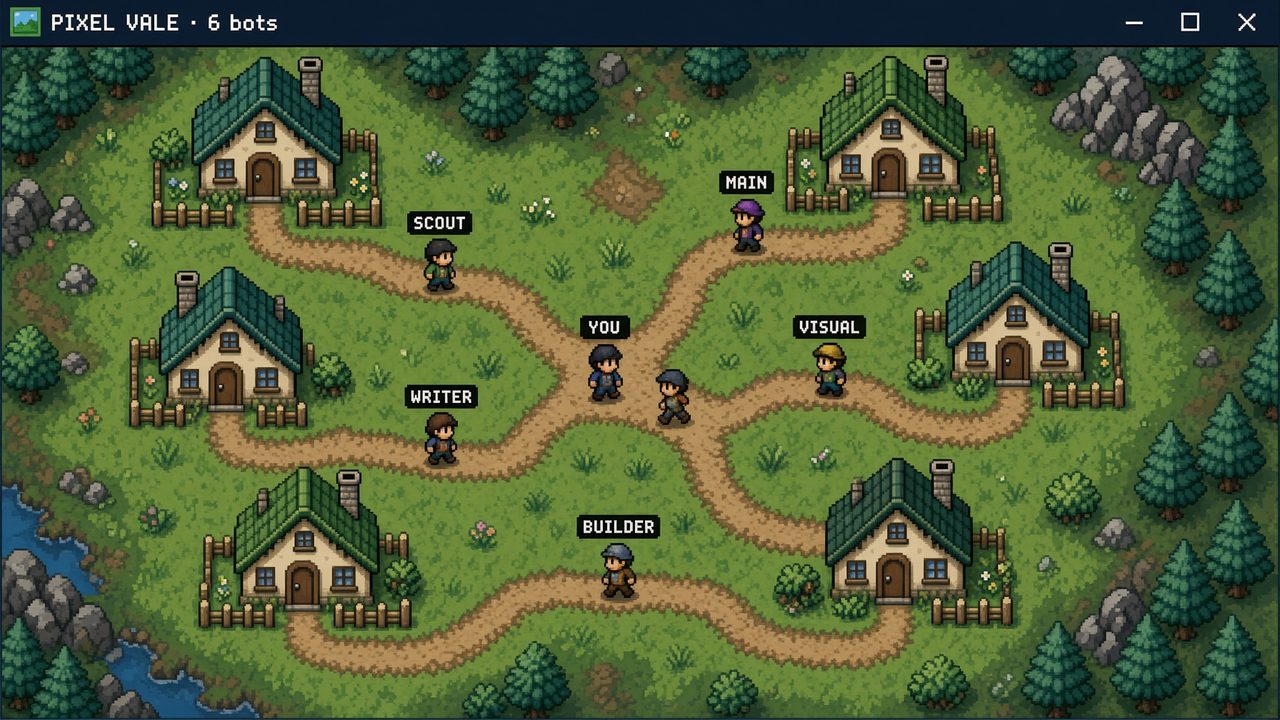
A small 8-bit vale where each bot is a villager. Bots walk to their plots to work and sit down when they are idle.
Works in Grok
8-bit · Main bot setup
★★★★★5.0 (1)51 views
Free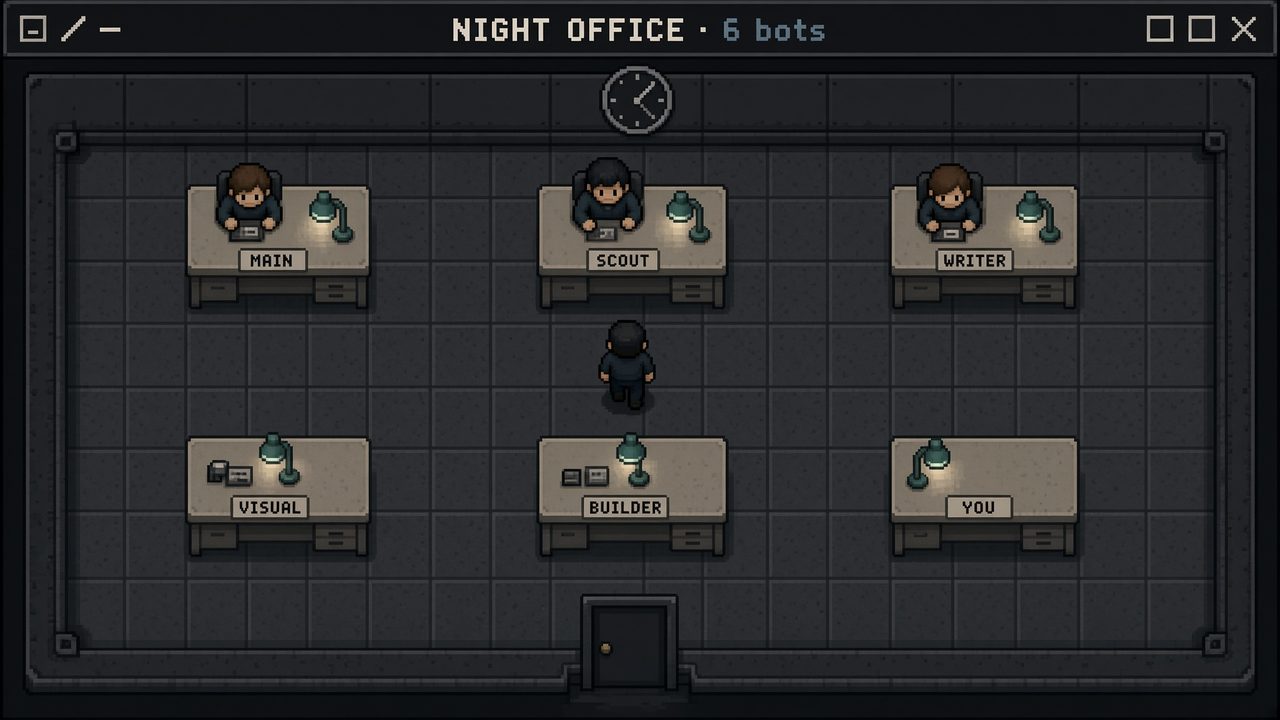
A top-down office after hours. Each bot has a desk. They sit to draft, walk the aisle to hand off, and wait at your door.
Works in Grok
8-bit · Main bot setup
40 views
Free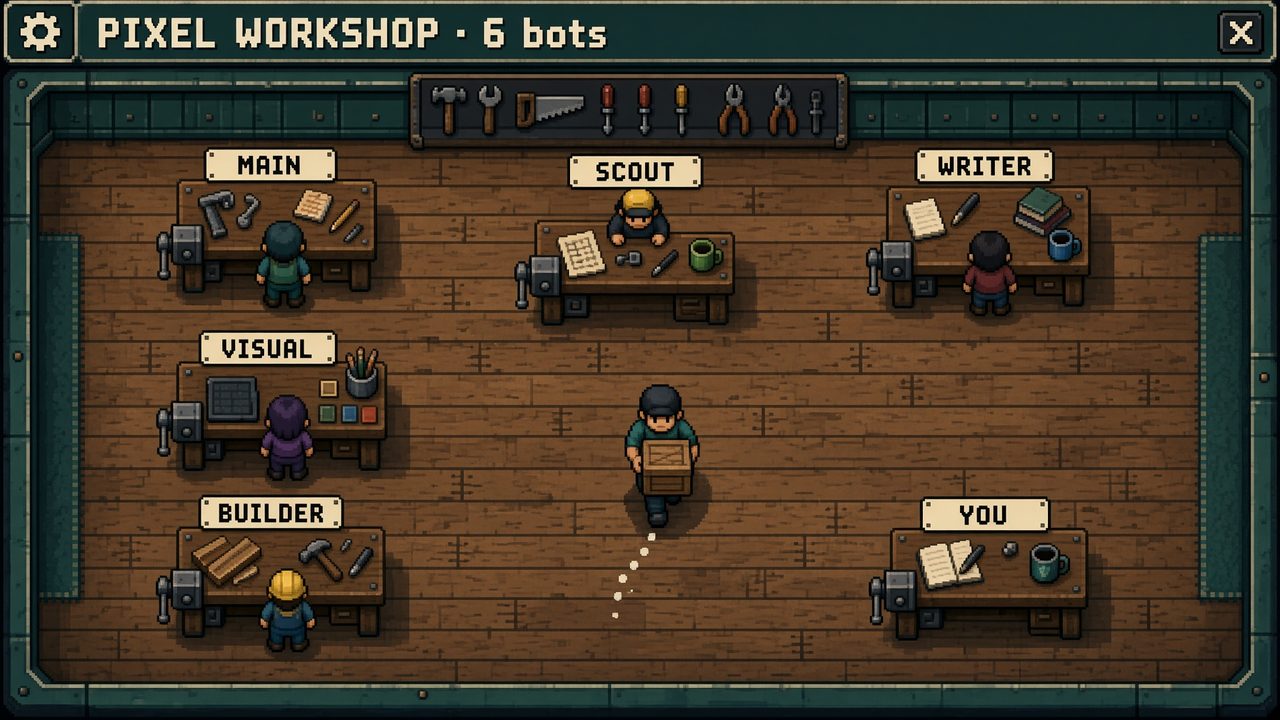
An 8-bit workshop where each bot has a bench. Bots work at their stations, carry handoffs across the floor, and bring requests to your bench.
Works in Grok
8-bit · Main bot setup
36 views
Free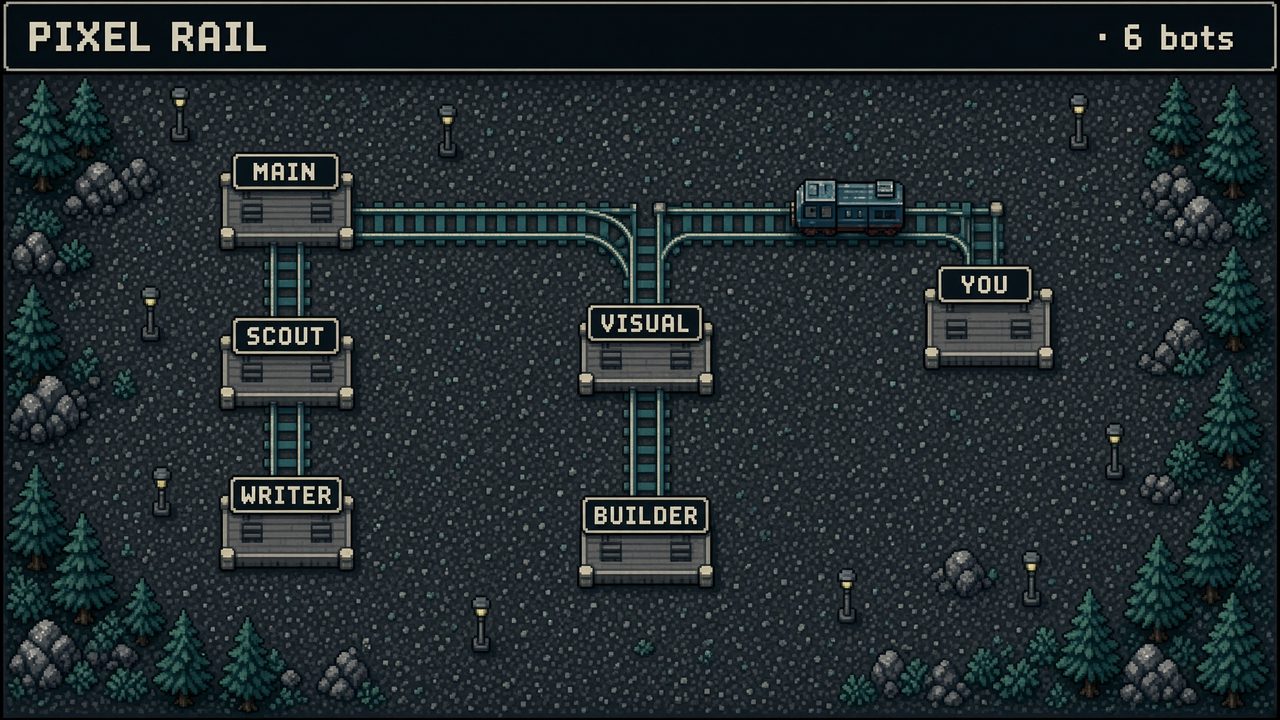
An 8-bit rail yard where each bot has a named platform. Handoffs appear as small cars traveling between platforms.
Works in Grok
8-bit · Main bot setup
37 views
Free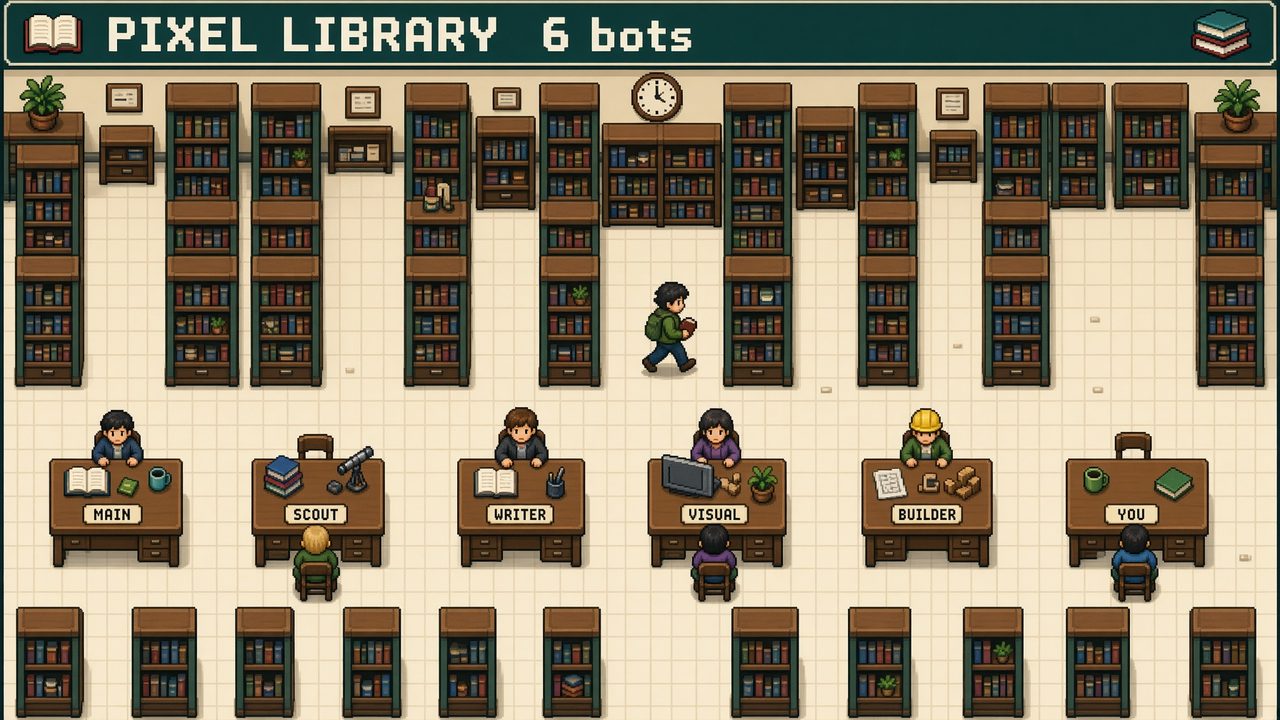
An 8-bit library where each bot has a desk among the stacks. Handoffs move through the aisles as books.
Works in Grok
8-bit · Main bot setup
42 views
Free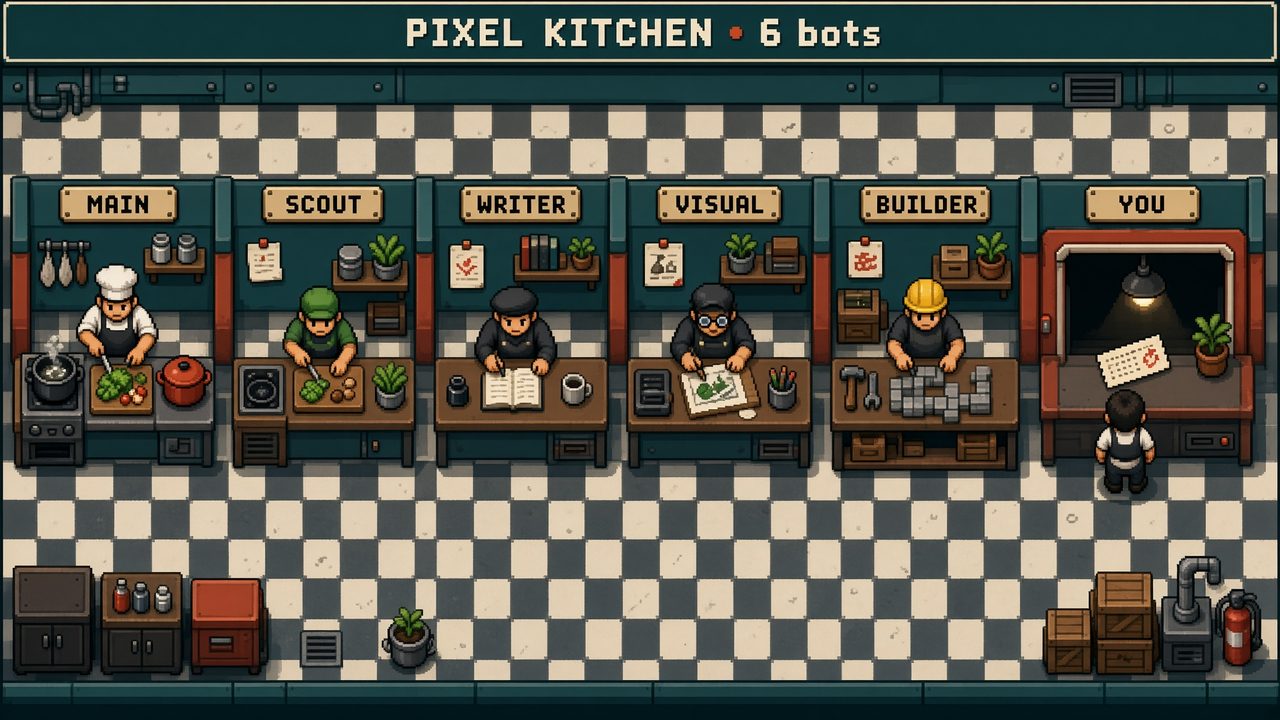
An 8-bit kitchen line where each bot has a station. Handoffs appear as tickets moving toward the pass.
Works in Grok
8-bit · Main bot setup
42 views
Free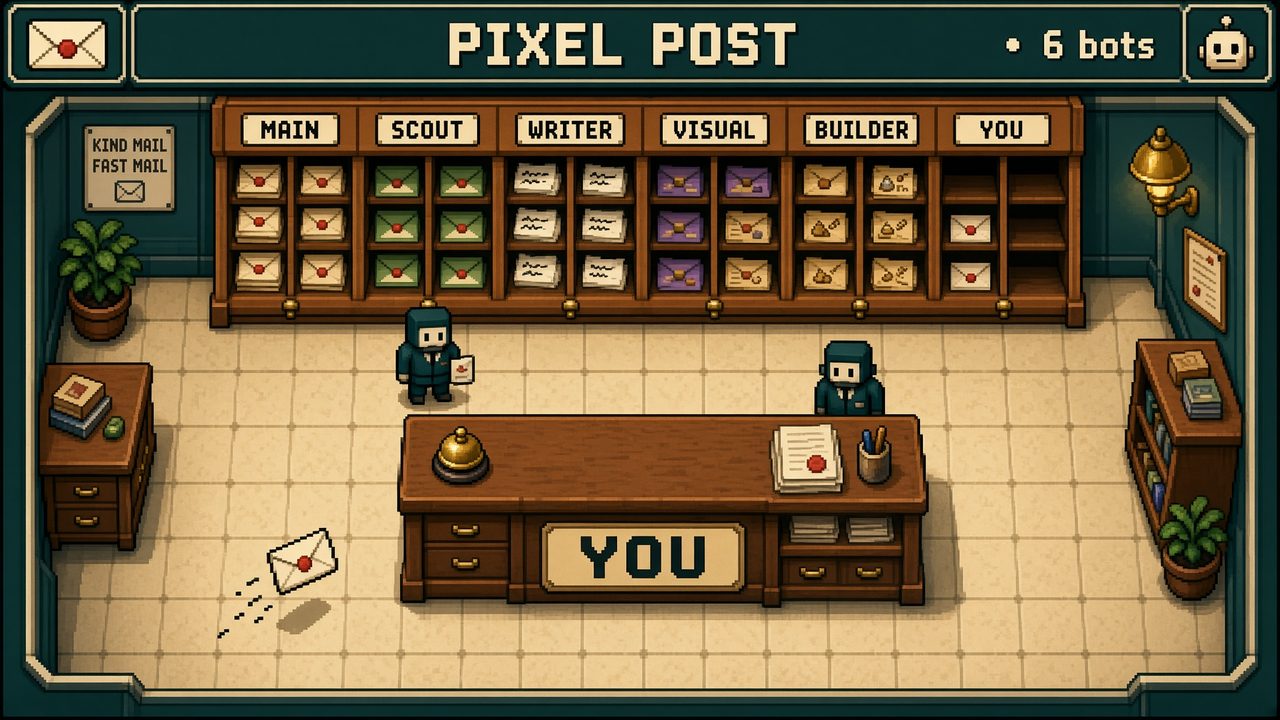
An 8-bit post room where each bot has a named slot. Handoffs appear as letters moving toward your counter.
Works in Grok
8-bit · Main bot setup
34 views
FreeA visualization is a map of the team, drawn by the main bot from the roster it already has. Each bot is a node — a villager, a desk, a lantern, a pier. Status comes from BOARD.md only: drafting, waiting for you, handed to someone, or idle. Quiet bots stay on the map. Fake tickers stay off it.
It is not a skin for Grok’s replies. It is a page the bot writes on the computer you already run: who is working, who handed work, who is waiting on you.
One look at a time. Stop for a yes before a public host or a second visualization.